What does the PPWR mean for
and your packaging?
PPWR = Packaging and Packaging Waste Regulation (new EU regulation)


Our Optimization Strategy
■ Reducing Material Use Despite PCR Requirements
■ Maintaining or improving load unit stability
Your Benefit
■ In most cases: Less material used and lower costs, despite higher material prices
■ Our consulting services and technical expertise ensure you get the most cost-effective solution for your processes
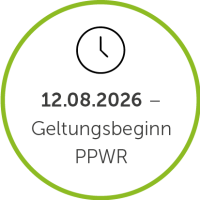
Effective August 12, 2026: Effective date of the PPWR—general requirements
and issuance of declarations of conformity by manufacturers. Specifically, compliance with the limit values for heavy metals must be ensured (Article 5, paragraph 4).
For packaging that comes into contact with food, the PFAS limit values must also be complied with (Article 5, paragraph 5).
Starting in 2028: Mandatory labeling for product packaging (excluding transport packaging)
Starting in 2030: Ban on oversized packaging, minimum recycled content requirements, recyclability
Starting in 2035: Proof of recycling rates
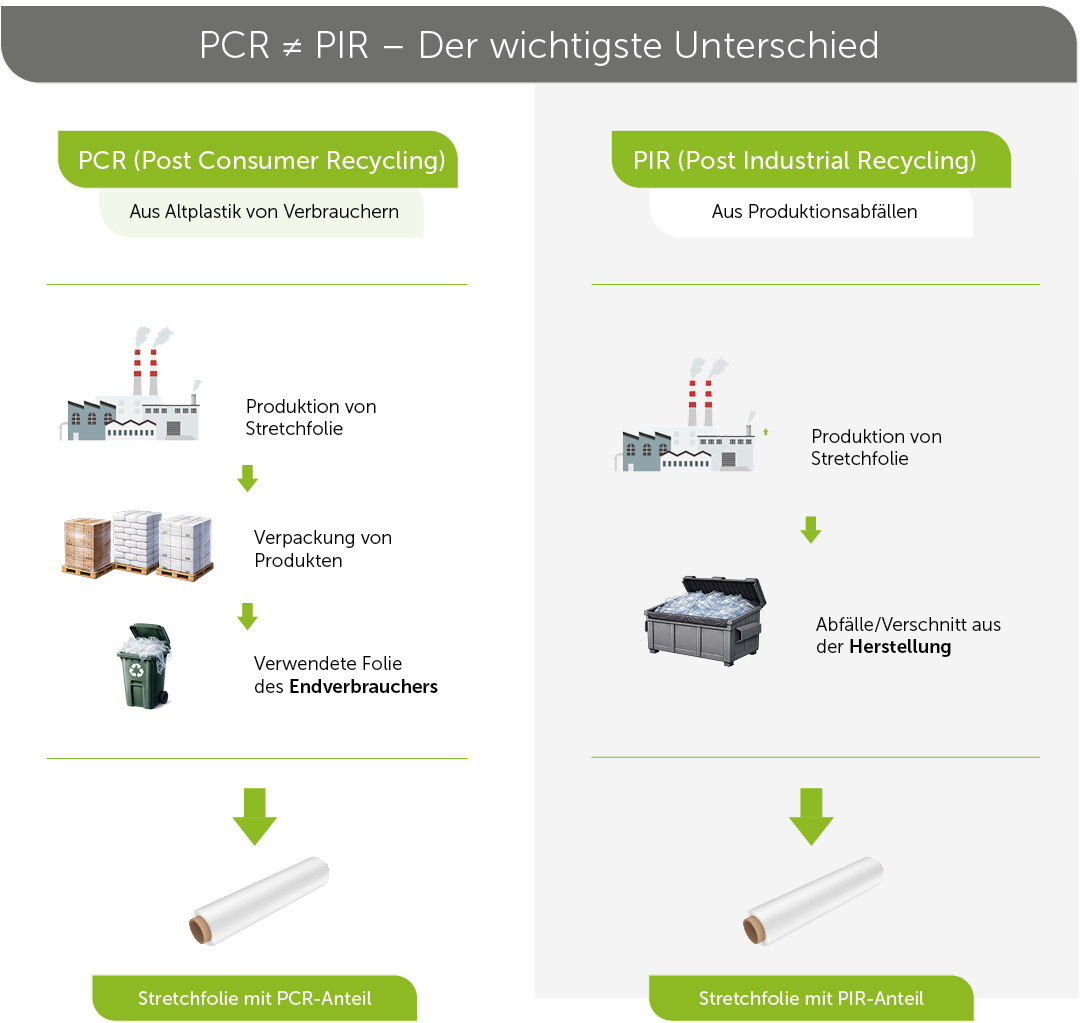
Production of
stretch film
Production of
stretch film
Packaging of
products
Waste/Scrap from Manufacturing
Film used
for the end user
■ The PPWR explicitly calls for PCR
■ PIR is not sufficient
■ Proof required
The goal:
■ EU-wide harmonization of packaging requirements
■ Replacement of the Packaging Directive 94/62/EC as of August 12, 2026
Objectives of the PPWR:
■ Waste prevention
■ Reusability & Recycling
■ Harmonization of Regulations in the EU
■ Reduction of packaging and transport volume
■ Transparency for consumers through mandatory labeling
■ Starting in August 2026, a declaration of conformity must be issued for all packaging. This declaration confirms compliance with the PPWR requirements; in other words, it confirms that the packaging meets all currently applicable PPWR requirements.
■ The obligation to issue declarations of conformity rests with the producer of the packaging, not with the manufacturer of individual components or the supplier of finished packaging. The producer is defined as the party who first uses the packaging for shipment and thereby places it on the market.
■ As your supplier of packaging materials, we will provide you with the product data necessary for preparing the declarations of conformity in a timely manner.
■ As of August 12, 2026, the declaration of conformity must explicitly confirm that the limit values of 100 mg/kg for the heavy metals lead, cadmium, mercury, and hexavalent chromium are not exceeded.
■ BFor packaging intended to come into contact with food, the declaration of conformity must also explicitly confirm that the PFAS limit values specified in Article 5, paragraph 5 of the PPWR are complied with.
■ Starting in 2030, packaging must be at least 70% recyclable.
■ Exceptions: Packaging made of lightweight wood, cork, textiles, rubber, ceramics, porcelain, and wax
■ Starting in 2035, packaging must not only be recyclable but also actually be recycled
■ There is still a great need for clarification from the EU regarding the assessment of recyclability
Current draft:
■ Originally, a 100% reusable quota was required for transport packaging
■ As things stand, this strict requirement is set to be repealed by a delegated act:
Pallet stretch films and strapping bands used to stabilize and protect load units are exempt from the 100% reusable quota under the
■ The 100% reusable requirement will effectively not be implemented for pallet stretch film and strapping
■ The remaining PPWR requirements—such as reusable targets for other transport packaging, recyclability, recycled content, and material minimization—remain unaffected and continue to apply

■ All product packaging must include information—via a QR code or other means—
about the composition of the packaging, its recycled content, and its recyclability.
■ Transport packaging, such as stretch film used to secure load units or outer cartons used as shipping packages,
are not subject to the labeling requirement.
■ The labeling requirement takes effect in 2028. It is important that the information on the packaging matches the products’ certificates of conformity and is updated whenever changes are made.
The goal:
■ EU-wide harmonization of packaging requirements
■ Replacement of the Packaging Directive 94/62/EC as of August 12, 2026
Objectives of the PPWR:
■ Waste prevention
■ Reusability & Recycling
■ Harmonization of Regulations in the EU
■ Reduction of Packaging and Transportation Volume
■ Transparency for consumers through mandatory labeling
■ Starting in August 2026, a declaration of conformity must be issued for all packaging. This declaration confirms compliance with the PPWR requirements; in other words, it confirms that the packaging meets all currently applicable PPWR requirements.
■ The obligation to issue declarations of conformity rests with the producer of the packaging, not with the manufacturer of individual components or the supplier of finished packaging. The producer is defined as the party who first uses the packaging for shipment and thereby places it on the market.
■ As your supplier of packaging materials, we will provide you with the product data necessary for preparing the declarations of conformity in a timely manner.
■ As of August 12, 2026, the declaration of conformity must explicitly confirm that the limit values of 100 mg/kg for the heavy metals lead, cadmium, mercury, and hexavalent chromium are not exceeded.
■ For packaging that comes into contact with food, the declaration of conformity must also explicitly confirm that the PFAS limit values specified in Article 5, paragraph 5 of the PPWR are complied with.
■ Starting in 2030, packaging must be at least 70% recyclable.
■ Exceptions: Packaging made of lightweight wood, cork, textiles, rubber, ceramics, porcelain, and wax
■ Starting in 2035, packaging must not only be recyclable but also actually be recycled
■ There is still a great need for clarification from the EU regarding the assessment of recyclability
Current draft:
■ Originally, a 100% reusable quota was required for transport packaging
■ As things stand, this strict requirement is set to be repealed by a delegated act:
Pallet stretch films and strapping bands used to stabilize and protect load units are exempt from the 100% reusable quota under the
■ The 100% reusable requirement will effectively not be implemented for pallet stretch film and strapping
■ The remaining PPWR requirements—such as reusable targets for other transport packaging, recyclability, recycled content, and material minimization—remain unaffected and continue to apply

■ All product packaging must include information—via a QR code or other means—
about the composition of the packaging, its recycled content, and its recyclability.
■ Transport packaging, such as stretch film used to secure load units or outer cartons used as shipping packages,
are not subject to the labeling requirement.
■ The labeling requirement takes effect in 2028. It is important that the information on the packaging matches the products’ certificates of conformity and is updated whenever changes are made.
■ Minimizing weight and volume.
■ Packaging must be designed so that weight and volume are reduced to the
minimum level necessary to ensure its functionality.
■ Ban on oversized packaging with double walls, false bottoms, and unnecessary layers
■ SSo-called "deceptive packaging" (packaging that makes the product appear to be larger than it actually is) is prohibited
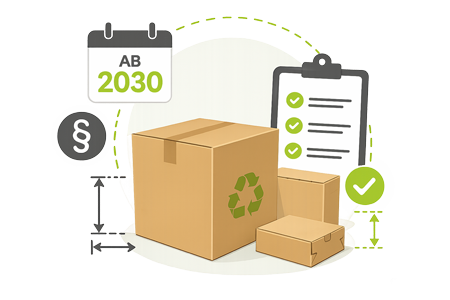
■ Minimizing weight and volume.
■ Packaging must be designed so that weight and volume are reduced to the
minimum level necessary to ensure its functionality.
■ Ban on oversized packaging with double walls, false bottoms, and unnecessary layers
■ SSo-called "deceptive packaging" (packaging that makes the product appear to be larger than it actually is) is prohibited
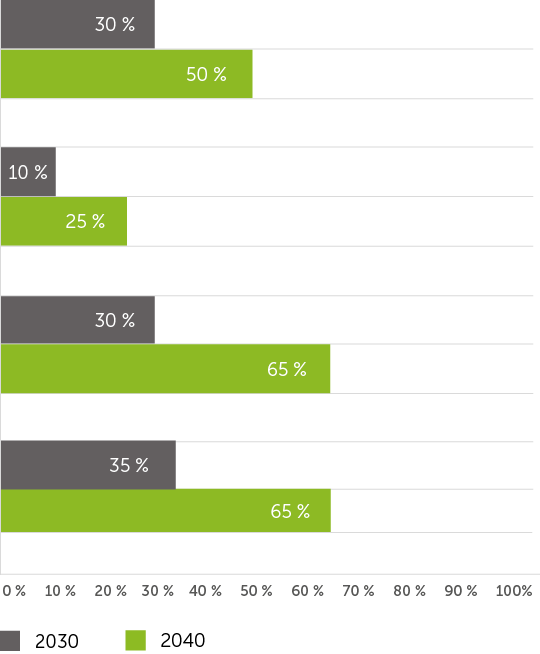
Contact-sensitive packaging with polyethylene terephthalate (PET) as the main component, excluding single-use plastic beverage bottles
Contact-sensitive packaging made of plastic materials other than PET, excluding single-use plastic beverage bottles
Disposable plastic beverage bottles
Other plastic packaging (e.g., stretch film)
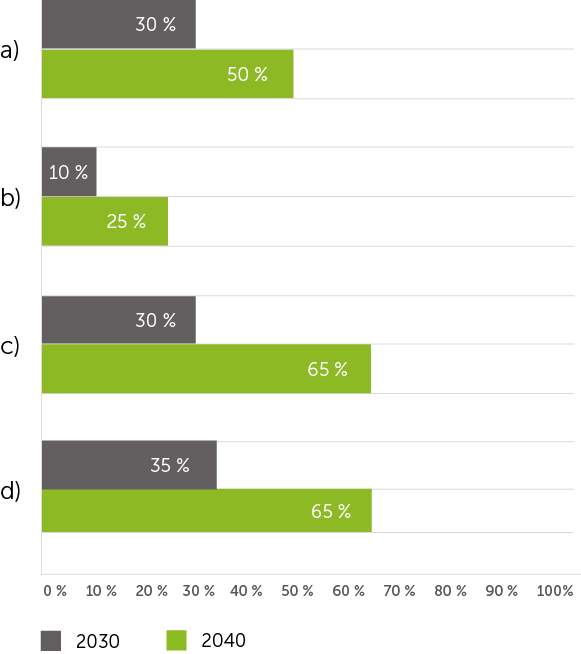
a) Contact-sensitive packaging made primarily of polyethylene terephthalate (PET), excluding single-use plastic beverage bottles
b) Contact-sensitive packaging made of plastic materials other than PET, excluding single-use plastic beverage bottles
c) Single-use plastic beverage bottles
d) Other plastic packaging (e.g., stretch film)
Article 7 of the PPWR stipulates that, as of January 1, 2030, plastic packaging must contain certain minimum percentages of recycled plastic.
These requirements explicitly refer to recycled plastics from consumer waste, i.e., PCR.
This means that only materials originating from the end-consumer waste stream may be counted toward these requirements.
Adhesive tapes used to seal cardboard boxes are not subject to the PPWR’s minimum recycled content requirements (particularly with regard to recycled content) provided they account for less than 5% of the packaging’s total weight. However, care must still be taken to ensure that they and other foreign materials do not account for more than 30% of the packaging’s total weight.
For users of adhesive tape for sealing cardboard boxes, this means specifically:
■ There are no requirements regarding the use of recycled content in the backing material or adhesive, as long as the adhesive tape and other foreign materials do not account for more than 30% of the packaging’s weight (see Recyclability).
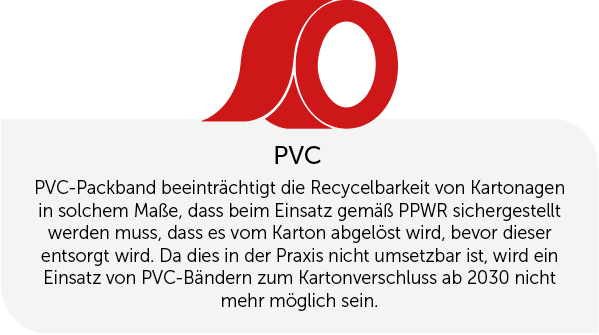
■ The tape must not interfere with the recycling of the cardboard boxes. Specifically: PVC tape may no longer be used, or it must be ensured that the tape is removed before recycling.
■ PVC contains chlorine. When exposed to heat and chemicals in the paper mill, it can:
■ Release chloride ions that degrade process water quality
and corrode plant materials.
■ In thermal processes (e.g., energy recovery from rejects)
, they release HCl or even dioxins.
■ Even small amounts of PVC are considered critical contaminants in the paper industry.
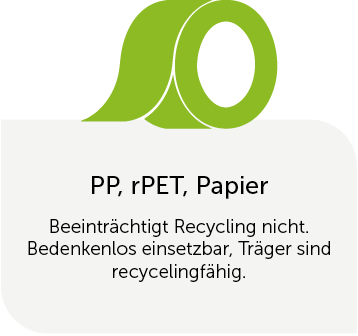
■ PP adhesive tapes, rPET adhesive tapes, and paper adhesive tapes can still be used, even without recycled content.
■ When it comes to adhesives, those that are easily water-soluble should be preferred, as they recycling process.
Our packaging optimization tools help you identify and leverage untapped optimization potential.
Contact us to receive your personalized plan!
"We're using the PPWR challenge to secure a better overall result for you at
—
—despite PPWR and rising PCR prices!"
– Christian Schröder
Christian Schröder
Sales Director
Toledo Brusius
Law and Security
Christian Schröder
Sales Director
Toledo Brusius
Law and Security
Contact us
Enviro Group GmbH
Kalteiche Ring 65
35708 Haiger
T +49 2773 74780-10
F +49 2773 74780-780
mail@enviro-group.de
Our offer on this website is aimed exclusively at companies, tradespeople and freelancers.
In which area do you need an individual check-up from our packaging optimizers?